What Is Community Supported Agriculture and Who Can It Benefit?
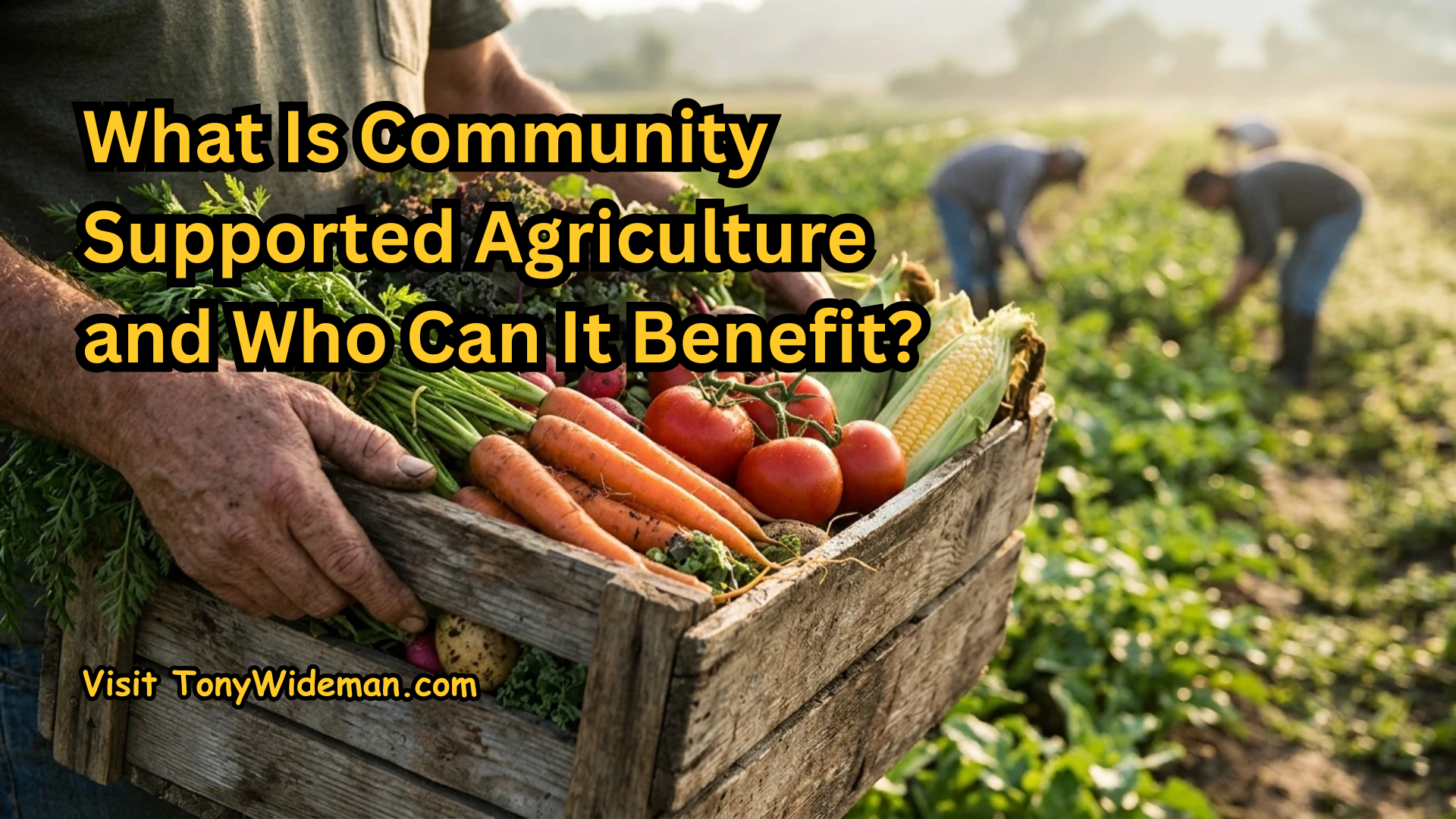
Ever wondered what would happen if you cut out the middleman between your dinner plate and the dirt your vegetables grew in? That’s the core idea behind Community Supported Agriculture, and once you understand it, you’ll wonder why every neighborhood doesn’t have one. This isn’t some trendy farm-to-table gimmick dreamed up by a marketing team — it’s a decades-old model that puts real money in farmers’ pockets before a single seed even hits the soil, while giving you a front-row seat to where your food actually comes from. Think of it like a Kickstarter campaign for your local farm, except instead of getting a T-shirt as a reward, you get a box bursting with tomatoes, kale, and whatever else the season throws your way. We’re going to walk through exactly how this works, what it costs, and — maybe most importantly — who stands to gain the most from signing up.
What Exactly Is Community Supported Agriculture?
At its heart, Community Supported Agriculture, or CSA, is a partnership where you and a group of other consumers essentially become co-investors in a farm’s growing season. CSAs, sometimes called “farm shares,” are made up of a community of individuals who pledge support to a farm operation so that the farmland becomes, in a sense, the community’s farm. Instead of walking into a grocery store and picking whatever produce made it there through a long, refrigerated supply chain, you’re putting your trust — and your money — directly into the hands of the person growing your food. It’s a bit like adopting a plant before it’s even planted, agreeing to love it (and eat it) no matter how it turns out. This direct relationship changes the entire dynamic of how food gets from field to fork, and it’s exactly why so many people describe joining a CSA as feeling less like a purchase and more like a partnership.
The Origins of the CSA Movement
You might assume this whole concept is a product of the modern farm-to-table craze, but it’s actually got roots stretching back much further than you’d guess. CSA originated in Europe and Japan back in the 1960s, driven by people who were concerned about the growing reliance on imported foods, and the concept didn’t reach the United States until 1985. Since then, the idea has quietly spread from a handful of pioneering farms into a nationwide movement. Current estimates suggest there are now more than 12,500 CSAs operating throughout the United States, which is a pretty remarkable jump for a model that started as a niche experiment among a few idealistic growers. What’s fascinating is that the core philosophy hasn’t really changed in sixty years — it’s still about shared risk, shared reward, and rebuilding a connection between eaters and growers that industrial agriculture slowly chipped away at.
How a Typical CSA Share Works
So how do the actual mechanics of a CSA play out once you sign up? You pay the farmer a sum of money, and each week or month, you receive a share of the farmer’s product, delivered to your door or picked up at a designated spot. Most memberships require you to pay in full during the wintertime, since that’s exactly when farms need capital to prepare for the coming spring, and deliveries then run through the high growing season, roughly May to October. Picture it like a subscription box service, except instead of curated skincare samples, you’re getting whatever nature decided to ripen that particular week — and that unpredictability is honestly part of the charm. Some weeks you’ll be drowning in zucchini and wondering what on earth to do with it all, and other weeks you’ll get a handful of treasures like heirloom tomatoes or the first strawberries of the season that taste nothing like their grocery store cousins.
How Much Does a CSA Membership Cost?
Money talks, so let’s get real about the numbers before you get too excited. The annual cost of a CSA share generally ranges from $400 to $700, depending on the length of the harvest season and the variety and quantity of products provided. That might sound like a chunk of change to hand over in one lump sum during the dead of winter, but when you break it down weekly, it often stacks up favorably against what you’d spend buying the same volume of fresh, organic produce at a grocery store. A full share commonly runs about $400 to $525 for the season, which typically covers an 18- to 22-week harvest period. That upfront chunk isn’t just a nice gesture toward the farmer — it’s genuinely functional money that funds seed purchases, equipment repairs, and the labor needed to get everything growing before the farmer sees a single dollar in return from a grocery buyer or farmers market customer.
| Cost Factor | Typical Range | What It Affects |
|---|---|---|
| Season length | 18–25 weeks | Total price and pickup schedule |
| Share size | Full vs. half share | Weekly quantity of produce |
| Delivery method | Pickup vs. home delivery | Added convenience fees |
| Product type | Produce-only vs. mixed (meat, eggs, flowers) | Overall share value |
Factors That Influence CSA Pricing
Not every CSA charges the same rate, and there’s a good reason for that — the pricing structure is basically a reflection of the farm’s own operating costs and what they’re offering inside the box. The cost of a CSA can vary widely depending on the frequency of delivery, whether you’re picking up or getting it delivered, the type of payment plan, and what exactly is included in the share. A farm that throws in pasture-raised eggs, honey, or cut flowers alongside the vegetables is naturally going to charge more than one offering a straightforward box of seasonal veggies. It’s kind of like comparing a basic streaming subscription to the premium tier that bundles in extra channels — you’re paying for added value, not just inflated pricing. Geography plays a role too, since farms operating near expensive urban markets often price their shares higher than rural operations, even if the actual produce inside is remarkably similar in quality and abundance.
The Core Benefits of Joining a CSA
Now that you understand the mechanics, let’s talk about why anyone would actually want to do this instead of just swinging by the supermarket on the way home from work. The benefits stack up in ways that touch your health, your wallet, your community, and honestly the planet too, which is a pretty rare combination for any single lifestyle choice to deliver. It’s not every day you find something that checks that many boxes simultaneously without feeling like a compromise on at least one of them.
Fresher, More Nutrient-Dense Food
If you’ve never tasted a tomato that was picked the same day you ate it, you’re genuinely missing out on something. A key health benefit of farm-fresh produce is that it’s picked at the peak of ripeness when nutrients are most dense, usually less than 24 hours before pickup, whereas grocery store produce is typically harvested before it’s fully ripe so it can survive the trip to store shelves without rotting. That difference isn’t just a matter of taste snobbery — nutrient density genuinely declines the longer produce sits between harvest and consumption, so shortening that window means you’re getting more bang for your nutritional buck with every single bite. It’s the difference between hearing a song live versus through a cheap phone speaker; technically it’s the same song, but the experience just isn’t comparable.
Supporting Small Farms and Local Economies
Here’s something that doesn’t get talked about enough: small farms are financially fragile in ways that most consumers never see. Small farms, like the ones that frequently operate CSAs, work on thin profit margins and are especially susceptible to the hazards of a bad growing season, often receiving less governmental support than large-scale operations despite being the most financially insecure. Every dollar you spend on a CSA share is a dollar that stays local rather than disappearing into a corporate supply chain that stretches across state lines or oceans. One regional program alone reported infusing $120,000 into the local agricultural economy in a single season, which gives you a small glimpse of just how much collective impact these individual purchasing decisions can have when enough people participate. Think of it as crowdfunding your regional food supply, except the “reward tier” you unlock is literally dinner, every single week.
Building Real Community Connections
There’s something almost old-fashioned, in the best possible way, about knowing the person who grew your food. Being part of community supported agriculture is a reliable way of meeting and influencing your neighbors and nearby food producers, and it’s a great way to connect with your farmer and other members during weekly pick-ups. In an era where most of us couldn’t tell you the name of the person who packaged our breakfast cereal, there’s real value in standing at a pickup site chatting with the farmer about how the rain affected the lettuce crop this week. It transforms grocery shopping from a transactional chore into something closer to a small weekly ritual, one that connects you to a community you might not have even known existed in your own neighborhood.
Reducing Environmental Impact
Beyond the social perks, CSAs quietly chip away at some pretty significant environmental problems too. The typical CSA uses almost no packaging, since members bring their own reusable bags and containers to transport items home, unlike supermarkets which largely rely on Styrofoam and plastic-based packaging. When you factor in that produce isn’t being shipped thousands of miles in refrigerated trucks, the carbon footprint of a single CSA box shrinks dramatically compared to its supermarket equivalent. It’s a small, almost invisible form of environmental activism — you’re not marching in the streets, but you’re voting with your grocery dollars for a food system that doesn’t rely on burning fossil fuels just to get a peach from one coast to the other.
Who Can Benefit From a CSA?
This is really the question that matters most, isn’t it? A model can sound great on paper, but who actually walks away better off for having joined one? The honest answer is that CSAs benefit a surprisingly wide range of people, and chances are pretty good that you fit into at least one of these categories yourself.
Health-Conscious Families
If you’ve been trying to get your household eating more fruits and vegetables, a CSA practically forces the issue in the best possible way. The USDA urges American consumers to eat more fruits and vegetables and to choose a healthier, more varied mix of these foods, and a CSA box shows up whether you’re feeling motivated that week or not, which takes the guesswork and decision fatigue completely out of the equation. Families with kids often find that a weekly box of unfamiliar vegetables sparks curiosity at the dinner table — suddenly you’re all figuring out together what on earth a kohlrabi even is, and that shared discovery becomes its own kind of family bonding.
Home Cooks and Food Adventurers
For anyone who genuinely loves being in the kitchen, a CSA is basically a weekly creativity challenge disguised as grocery shopping. CSAs expose you to a wide variety of fresh, local food, encourage experimentation with new ways of cooking, foster creativity, and promote a healthier lifestyle overall. You don’t get to choose exactly what shows up, and that’s precisely the point — it pushes you out of the rut of buying the same five vegetables every single week and forces you to actually learn how to cook with things like celeriac or garlic scapes. If you’ve ever felt stuck in a cooking rut, this might be the nudge your kitchen routine has been desperately needing. peoplefirsteconomy
Environmentally Minded Consumers
Anyone who already cares about sustainability finds a natural home in the CSA model, since it aligns almost perfectly with values they’re already trying to live by. Reduced packaging, shorter supply chains, and direct support for regenerative growing practices all add up to a purchasing decision that feels consistent with a broader environmental ethic rather than working against it. It’s the difference between talking about wanting to shop more sustainably and actually having a concrete, repeatable weekly habit that puts that value into action without requiring a huge amount of extra effort on your part.
Small Farmers Themselves
It’s easy to focus entirely on the consumer side of this equation, but farmers arguably benefit just as much, if not more. By paying at the beginning of the season, CSA members share in the risk of production and relieve the farmer of much of the time and expense that would otherwise go toward marketing their harvest. That’s a huge deal for someone whose entire livelihood depends on unpredictable weather, pest pressure, and market fluctuations that are almost entirely outside their control.
Guaranteed Upfront Capital
The financial mechanics here genuinely matter more than people realize at first glance. This upfront payment helps buy the seed and other inputs needed for the season and provides the farmer with immediate income to begin the season, essentially functioning as an interest-free loan that arrives exactly when the farmer needs it most — before a single vegetable has sprouted. Compare that to a traditional wholesale model where a farmer plants everything on credit and prays the harvest sells for enough to cover costs, and you start to understand why CSA membership fees feel less like a purchase and more like an act of genuine partnership.
Low-Income Households Through Subsidized Programs
Here’s a piece that often gets overlooked: CSAs aren’t just for people with disposable income to spare. Programs sponsoring low-income families to participate in season-long CSA shares at no cost have grown from a pilot with three farms into a network spanning 18 farms and 11 counties, distributing 243 shares to households, many with children. These initiatives frequently partner with local health departments and nutrition assistance offices to reach families who otherwise couldn’t afford fresh, organic produce on a regular basis. It’s a beautiful example of the CSA model flexing beyond its original consumer base to actually address food access and equity issues in communities that need it most.
Potential Drawbacks to Consider
Nothing’s perfect, and it wouldn’t be fair to paint CSAs as some flawless utopia without a single downside worth mentioning. The lack of choice that makes CSAs exciting for adventurous cooks can feel genuinely frustrating for picky eaters or anyone who simply doesn’t know what to do with a sudden surplus of turnips. The upfront lump-sum payment can also strain a budget, especially since you’re committing money months before you see a single vegetable in return, and there’s always some inherent risk that a rough growing season could mean smaller or less varied boxes than you were hoping for. Pickup schedules can be inconvenient too if a farm’s designated location and time slot doesn’t mesh well with your work hours or family commitments, so it’s worth being honest with yourself about your lifestyle before you commit your money and your Saturday mornings to a season-long arrangement.
How to Choose and Join the Right CSA
Ready to actually take the plunge? Start by researching farms in your area, and don’t be shy about reaching out directly with questions — most farmers genuinely love talking about their operation and will happily walk you through what a typical box looks like throughout the season. Ask about share sizes, whether half-shares are available if a full share feels like too much for your household, and what happens if a crop fails or the harvest runs lighter than expected in a given week. Pay attention to pickup logistics too, since a farm with a convenient location and flexible timing will matter enormously once you’re several months into a commitment. Once you’ve found a farm whose values, offerings, and logistics line up with your life, signing up is usually as simple as filling out a form and making that initial payment — and from there, you just wait for the season to unfold, one delicious box at a time.
Conclusion
Community Supported Agriculture isn’t just a clever way to score fresh vegetables — it’s a genuine reshaping of the relationship between the people who grow food and the people who eat it. Whether you’re a health-conscious parent, a curious home cook, an environmentally minded shopper, or a small farmer trying to make it through another unpredictable growing season, there’s a real, tangible benefit waiting for you inside that weekly box. It asks a little more commitment and flexibility than a typical grocery run, sure, but what you get back — fresher food, a stronger local economy, real community ties, and a lighter environmental footprint — makes that trade-off feel less like a sacrifice and more like an upgrade to how you eat altogether.
Frequently Asked Questions
1. How far in advance do I need to sign up for a CSA?
Most farms open enrollment in late winter or early spring since that timing helps them plan seed purchases and plot layouts, so it’s smart to start researching options a few months before the growing season actually begins.
2. Can I get a CSA share if I live alone?
Absolutely — many farms offer half-shares specifically designed for smaller households or individuals who don’t need the volume that a full family-sized box provides.
3. What happens if the harvest is bad one week?
Since CSAs operate on a shared-risk model, you might occasionally get a smaller or less varied box during rough weather stretches, but that’s balanced out by unusually abundant boxes during particularly strong growing weeks.
4. Do CSAs only offer vegetables?
Not at all — many farms now diversify their offerings to include fruit, eggs, meat, dairy, honey, and even flowers alongside the standard vegetable share.
5. Are there ways to join a CSA if I can’t afford the upfront cost?
Yes, many regions have subsidized CSA programs, often run through nonprofits or health departments, that sponsor low-income families so cost doesn’t become a barrier to accessing fresh, local food.