Own Less, Grow More, Owe No One
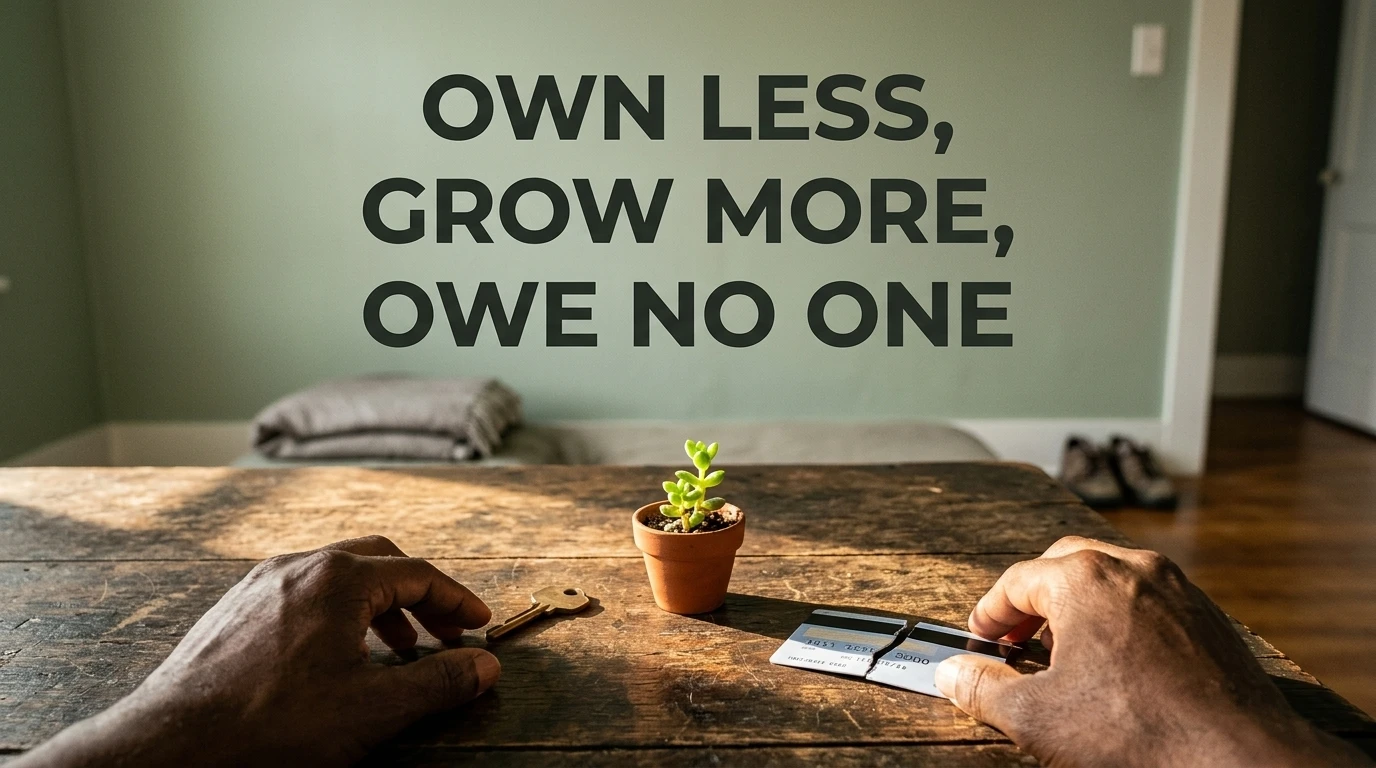
The average household in the United States carries thousands of dollars in things they rarely use and debt they didn’t plan for. Most of us didn’t choose this directly. We bought a home that needed filling, a job that needed a work wardrobe, a Saturday that needed a shopping trip to feel like a weekend. One purchase at a time, we built a life that requires a full-time income just to maintain, and somewhere in there we stopped asking what we actually wanted it to look like.
That gap, between the life you’re financing and the life you’d choose if nobody was selling you anything, is where this Hub starts. Not with a list of things to throw away. With a question: what would you do with your time and your money if neither one was already spoken for?
Why we built this around two pillars, not a hundred tips
A search for minimalist living turns up thousands of articles about folding shirts and capsule wardrobes. Useful, sometimes. But tips don’t add up to a plan, and a plan is what actually changes a life.
This site is organized around two pillars instead, because the research and the writing here keep pointing at the same two levers, over and over. Your money either works for you or against you, and your time either grows something or gets spent on things that don’t matter to you. Everything else, including the decluttering, is in service of those two.
Pillar one: money that stops controlling you
Debt is a monthly payment on a decision you made months or years ago, and it decides how much of your current paycheck belongs to your past self. Getting out from under it isn’t about deprivation. It’s about getting your income back so it can go toward something you actually chose.
That starts with knowing your real number before you make a move, especially if the move is leaving a job that’s costing you more than it pays. If you’re thinking about walking away from work that drains you, build your cushion first using the emergency fund calculator, so the decision is backed by math instead of frustration.
Cutting the outflow matters just as much as building the fund. Food is usually the easiest place to find real money without feeling deprived, since a few home-cooked meals a week can undo what fast food and convenience delivery quietly take from a budget.
Pillar two: a backyard, balcony, or windowsill that feeds you
The second pillar is less about saving money and more about where your time and attention go once you have some back. A garden, even a small one, does something a grocery run never will: it gives you a reason to step outside, slow down, and watch something grow because of what you did.
It’s also a genuine grocery bill reducer, which matters while you’re still working on pillar one. You don’t need land for this. Container gardening for minimalist urban living covers how to start with pots on a patio or a few feet of windowsill, and it scales up as your space and your interest grow.
The third thread: less stuff, less noise, more room to think
Decluttering isn’t a separate hobby from the two pillars above. It’s the thread that ties them together, because clutter is rarely just physical. The pile of unused equipment in the garage represents money that’s already spent and a decision you’re avoiding. The unread emails and the open tabs represent attention that could be going toward the garden, the side income, or the people in your house.
Most of what’s actually weighing on you isn’t visible in a single glance around the room. Clutter is 90 percent invisible, sitting in drawers, subscriptions, and obligations you agreed to once and never reconsidered. Clearing it is less about owning fewer things and more about owning only the things and commitments that are actually yours.
Where to start if this is your first week here
If you’re new, start with your mind before your closet. Consumer culture is loud, constant, and designed to make you feel behind, and it’s worth understanding how that pressure works before you try to opt out of it. Stop consumerism from dominating your mind and life is the right first step, because the mindset shift makes every practical step afterward easier.
From there, pick one room and one bill. Declutter something small this week. Look at one recurring expense and ask if it earns its place.
Where to go next if you’ve already begun
If you’ve already started cutting back, the next move is usually bigger than a drawer. Swedish death cleaning takes the gentle approach further, asking you to sort your whole life down to what you’d actually want someone else to find. If you’ve handled the physical clutter, minimalism and Swedish death cleaning are a good next stop, and from there the path leads naturally into turning your freed-up time into income on your own terms.
Spend more time with family and good friends. Streamline and declutter your life to create true freedom, happiness, and financial freedom.