Why I Got Rid of Almost Everything I Owned
If you landed here after searching for a minimalist living blog about me, here is the short version: this page is less a biography and more an explanation of three kinds of weight that tend to pile up in a life at the same time: physical stuff, mental noise, and debt, and what changes when a person sets each one down on purpose.
The night I realized my stuff owned me
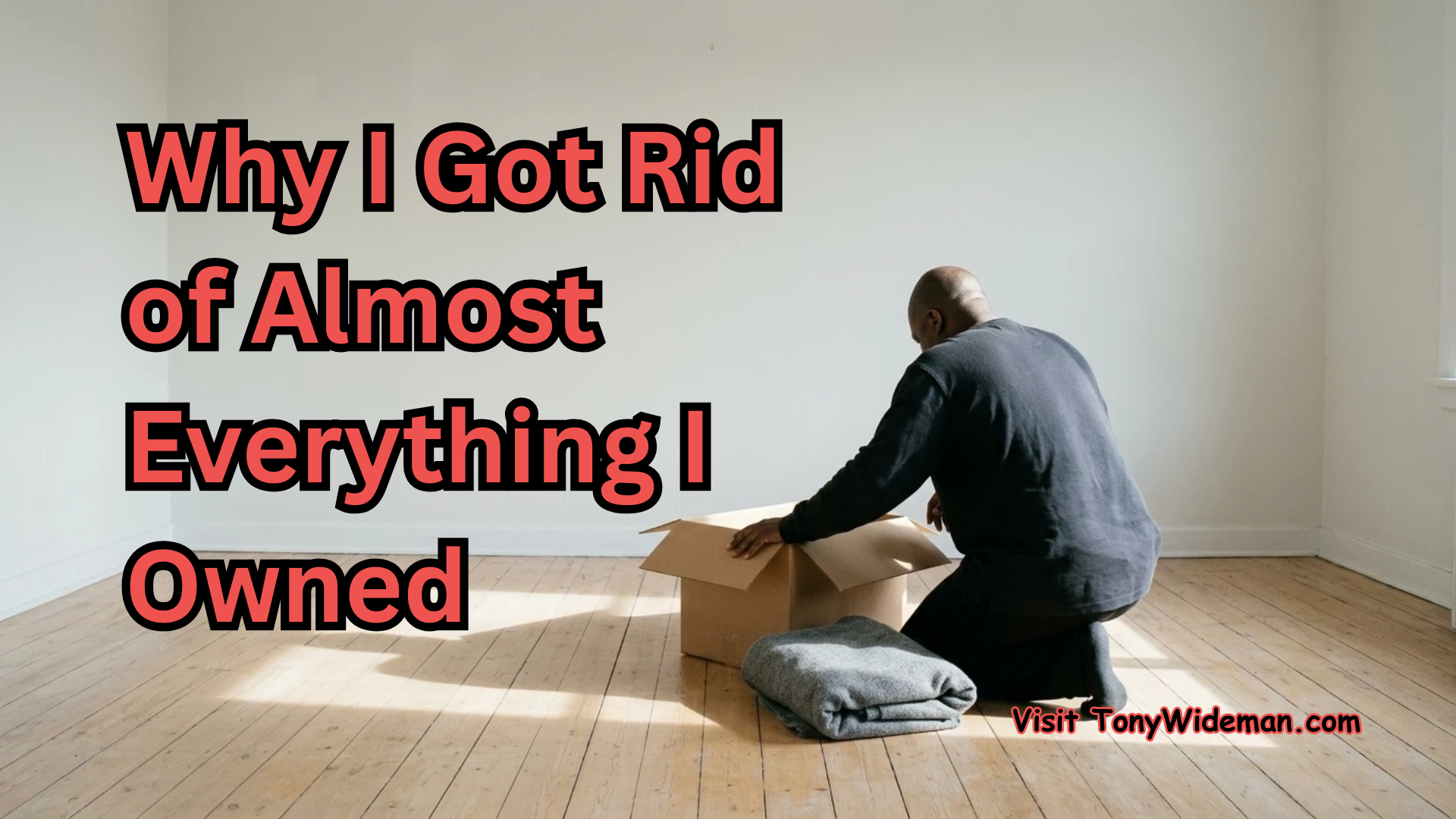
There is a specific feeling that comes from standing in a room full of things and realizing none of them are doing anything for you. A closet holding clothes that have not been worn in years. A garage too full to park in. A drawer of cables for devices that are long gone. That feeling, more than any single object, is the starting point for this Hub: the moment when possessions stop serving a life and start occupying the space where a life should be.
Minimalist living, at its most useful, is not about owning as little as possible for its own sake. It is about noticing which things are actually earning their place and getting rid of everything else, so the things that remain can actually be used, seen, and enjoyed.
Clearing out my head was harder than clearing out my closet
Emptying a closet takes an afternoon. Emptying a mind takes longer, because mental clutter does not sit in a pile where you can see it. It is the running list of half-finished obligations, the open tabs, the notifications, the small decisions that never get made and just accumulate instead. A room can look clean while the person standing in it is still carrying a full inbox in their head.
That gap between a tidy house and a tired mind is worth naming directly, because most decluttering advice stops at the visible layer. The invisible layer, the mental one, usually needs its own approach, which is covered in more detail in Clutter Is 90 Percent Invisible And How To Better Declutter.
The debt I was too embarrassed to talk about
Debt is the third layer, and it is usually the one people talk about least, because it comes with a shame that clutter and mental noise do not carry in quite the same way. A messy closet is just a messy closet. Owing money can feel like a verdict on your judgment, even when it is really just the ordinary result of living in a system built to keep people spending.
Untangling that shame matters as much as untangling the debt itself, because a person who is still quietly embarrassed about what they owe will make different decisions than a person who has said it out loud and started dealing with it. That connection between what you own, what you owe, and who you actually answer to is the whole argument behind Own Less, Grow More, Owe No One.
What I did with the space, time, and money I got back
Clearing out stuff, noise, and debt does not just remove weight. It returns three things: physical space, hours that used to go toward managing possessions and minimum payments, and money that used to be spoken for before it ever arrived. What happens next is the interesting part.
Reclaimed space can become a place to grow something, cook something, or simply sit without clutter pressing in from every surface. Reclaimed time can go toward a small business, a skill, or a project that got pushed aside for years. Reclaimed money stops disappearing into payments on things that were never worth the interest and starts becoming a choice instead of an obligation. This Hub exists to walk through all three of those outcomes, not just the first one.
Why I started writing about this instead of keeping it to myself
Most minimalism content stops at the empty closet and calls it done. That leaves out the part that matters most to someone buried under stuff, noise, or debt right now: what comes after the clearing out. This Hub was built to cover that part, because the real payoff of minimalist living is not an empty room. It is what you do with the space, time, and money that room represents.
That is also why the posts here range beyond decluttering tips into subjects like mindset, spending habits, and practical ways to turn reclaimed time into income. If consumer habits are part of what put the weight on in the first place, it makes sense to address that directly, which is the focus of Stop Consumerism From Dominating Your Mind And Life.
Who this Hub is for, and what you will not find here
This Hub is for people who feel buried by belongings, by mental noise, by debt, or by all three, and who want their time and attention back for the things that actually matter to them. It is written for people at the start of that process as much as for those years in and still refining how they live.
You won’t find minimalism here as an aesthetic performed for an audience: all-white rooms, twenty-two possessions counted out for a photo, or the idea that owning less automatically makes someone a better person. The goal here is functional, not decorative. Own less, carry less mental weight, owe less, and use what gets freed up to build something worth having.
If the story on this page is the part that explains why, the practical next step is the part that explains how. Read Earn A Full-time Income By Becoming A Minimalist to see what came after the decluttering described here, and how the space, time, and money it freed up turned into income.