
Why Peanut Butter After 65 May Be One of the Smartest Additions to Your Diet, According to New Research
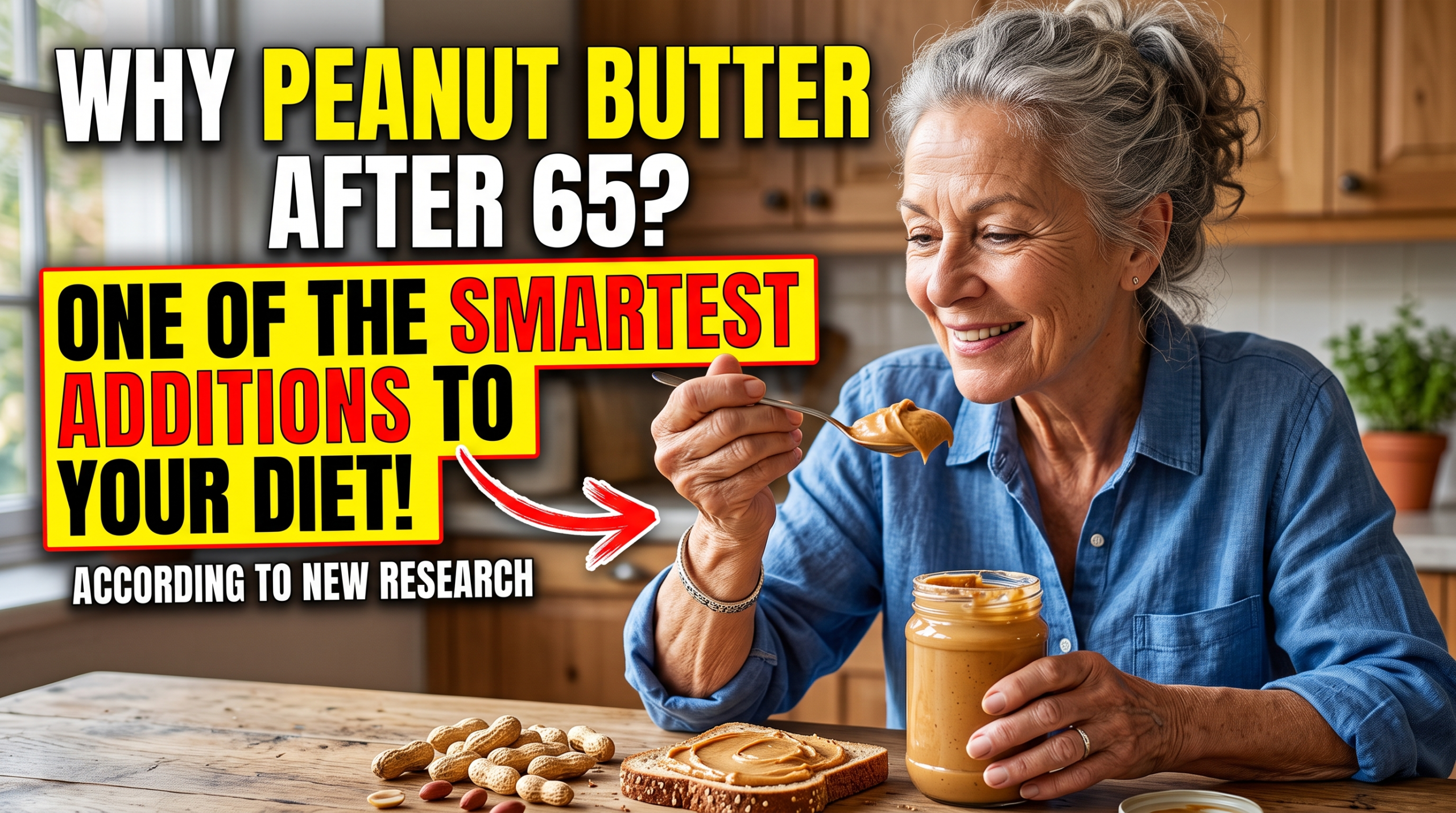
Growing older does not have to mean growing weaker. While the conversation around healthy aging often centers on complicated supplement stacks or intense exercise regimens, a new randomised controlled trial suggests that something far simpler — a spoonful of peanut butter — may help older adults protect the muscle power they need for everyday life. We break down exactly what the science says, why it matters, and how to put it into practice.
The New Study: What Researchers at Deakin University Found
Researchers at Deakin University’s Institute for Physical Activity and Nutrition (IPAN) in Melbourne, Australia, set out to answer a deceptively simple question: can a daily serving of peanut butter meaningfully improve physical function in older adults who are already at risk of falling?
To find out, the team designed a six-month, single-blind, randomised controlled trial published in the Journal of Cachexia, Sarcopenia and Muscle. We consider this an important detail, because much of the existing research linking nut consumption to healthy aging has been observational — meaning it can show an association but cannot prove cause and effect. A randomised controlled trial is widely regarded as the gold standard of nutrition science, which gives these findings considerably more weight.
The trial enrolled 120 community-dwelling adults aged 65 and older, all of whom were identified as being at risk of falls and living independently. Participants were randomly split into two groups:
- The intervention group consumed 43 grams of peanut butter daily, roughly equivalent to three tablespoons, for six months.
- The control group continued their usual diet and avoided nuts entirely during the study period.
Researchers assessing the outcomes were blinded to which group each participant belonged to, reducing the risk of bias influencing the results. By the end of the trial, 108 of the 120 participants — about 90% — completed the full six-month protocol, a strong retention rate for a study of this length.
What the Peanut Butter Group Actually Experienced
The primary outcome the researchers tracked was gait speed, measured using a standard four-meter walking test. Somewhat surprisingly, walking speed did not improve significantly in the peanut butter group compared to the control group. We think this is worth stating plainly upfront, because it tempers the more dramatic headlines circulating about this study.
However, the real story emerged in the secondary outcomes, particularly a test known as the five-times sit-to-stand test. This assessment measures how quickly a person can rise from a seated position and sit back down five times in a row without using their arms for assistance — a movement that closely mirrors real-world tasks like getting up from a couch, a toilet, or a car seat.
Participants who ate peanut butter daily completed this test approximately 1.2 seconds faster than those in the control group after six months. While 1.2 seconds might sound modest on paper, clinicians who study fall risk consider this a clinically meaningful improvement, because the sit-to-stand test is closely tied to lower-body muscle power — one of the strongest predictors of fall risk, frailty, and loss of independence in older adults.
Lead researcher Dr. Sze-Yen Tan, an associate professor of nutrition at Deakin University, explained that the study measured multiple dimensions of physical function, including mobility, balance, muscle power, and muscle endurance. According to Tan, the peanut butter intervention specifically improved muscle power — the kind of strength needed for activities like standing up from a chair or climbing a flight of stairs — even though it did not translate into faster walking speeds.
Why Muscle Power Matters More Than You Might Think
Muscle power is not the same thing as muscle strength. Strength refers to the maximum force a muscle can produce, while power refers to how quickly that force can be generated. As we age, power tends to decline faster than strength, and this decline is strongly linked to the risk of falling, since it governs how quickly someone can react to a stumble or catch their balance before hitting the ground.
Understanding this distinction helps explain why the study’s authors are optimistic about the findings, even though gait speed itself did not change. Muscle power underlies the ability to perform sudden, functional movements — getting out of a chair quickly, catching yourself on a curb, or climbing stairs without hesitation.
Why Aging Bodies Lose Muscle in the First Place
To appreciate why this research matters, it helps to understand the underlying biology of age-related muscle loss, sometimes referred to as sarcopenia. Muscle mass and strength begin a slow decline as early as a person’s 30s and 40s, but the process accelerates markedly after age 50. Over the course of a lifetime, we can lose roughly 20% to 30% of muscle mass and 40% to 50% of muscle strength.
After age 65, physical function tends to wane even more rapidly, sometimes dropping to less than half of its peak capacity. This decline is not just a cosmetic or aesthetic concern. It carries serious consequences, including:
- A significantly higher risk of falls and fractures
- Increased likelihood of hospitalization
- Greater risk of losing independence and requiring assisted care
- A measurable decline in overall quality of life
Falls in particular represent a major public health concern. Roughly one in four American adults aged 65 and older experiences a fall each year, and falls remain one of the leading causes of injury-related death and disability among older adults. Any intervention — dietary or otherwise — that can meaningfully reduce this risk deserves serious attention.
The Nutritional Case for Peanut Butter as We Age
Peanut butter is not a novel superfood, but its nutritional profile happens to align remarkably well with what aging bodies need. A standard three-tablespoon serving (about 43 grams) delivers approximately:
| Nutrient | Approximate Amount per 43g Serving |
|---|---|
| Calories | ~250 kcal |
| Protein | ~10 g |
| Fat (mostly unsaturated) | ~20 g |
| Key nutrients | Magnesium, vitamin E, niacin, healthy monounsaturated fats |
We find it notable that participants in the peanut butter group increased both their protein and healthy fat intake over the study period without gaining weight — a finding that directly counters the common assumption that peanut butter is simply a calorie-dense indulgence to be avoided later in life. Researchers also observed that the intervention group derived about 4% less of their daily energy from carbohydrates, replacing some of that intake with the fats and protein provided by the peanut butter itself.
Protein in particular plays an outsized role in preserving muscle as we age. Many older adults fall short of their daily protein needs, partly due to reduced appetite, difficulty chewing or preparing protein-rich foods, or outdated dietary advice that overemphasizes carbohydrate-heavy meals. Peanut butter offers a soft, easy-to-chew, shelf-stable, and inexpensive way to close that gap — an especially valuable trait for older adults living alone, who may not always have the energy or resources to prepare protein-dense meals from scratch.
How Peanut Butter Compares to Other Muscle-Supporting Foods
While peanut butter performed well in this specific trial, it is worth placing it in context alongside other nutrient-dense options that support healthy aging. We recommend viewing peanut butter as one useful tool among several, rather than a singular solution.
Unlike many other protein sources, peanut butter requires no preparation, refrigeration, or cooking skill, which may partly explain why adherence in the study remained high throughout the six months. This practicality factor should not be underestimated when designing sustainable dietary habits for older adults, many of whom cite convenience as a major barrier to consistent healthy eating.
What This Study Does — and Does Not — Prove
We believe it is important to approach these findings with appropriate nuance rather than sweeping claims. Setareh, a nutrition expert cited alongside coverage of the study, cautioned that while the results are encouraging, the improvement observed is modest in absolute terms. A 1.2-second improvement in a sit-to-stand test is meaningful for researchers studying functional decline, but it is not a dramatic transformation, and peanut butter alone is unlikely to reverse significant existing muscle loss.
It is also worth noting that this trial focused specifically on adults already identified as being at risk of falls, so the results may not generalize identically to healthier, more physically active older adults. Additionally, walking speed — the study’s primary outcome measure — did not improve, which suggests peanut butter’s benefits may be more targeted toward specific aspects of muscle power rather than overall mobility.
None of this diminishes the value of the findings. Rather, it reinforces that peanut butter should be viewed as a complementary strategy, not a replacement for the two pillars long recognized as essential to healthy aging: adequate protein intake and regular resistance-based exercise.
Emerging Research: Peanut Butter and Brain Health
Separately from the Deakin University trial, other emerging research has explored how peanuts and peanut butter may influence memory, mood, and stress response, primarily in studies involving younger adults. While this line of research is still developing and should not be conflated with the muscle-function findings discussed above, it points to a broader pattern: peanuts and peanut butter appear to offer benefits that extend beyond simple calorie or protein content, potentially touching multiple systems in the body, including cognitive function.
How to Add Peanut Butter to Your Diet After 65
For those looking to apply these findings practically, we suggest keeping the approach simple and consistent with how the study was designed. Participants consumed about three tablespoons daily, which can be incorporated in several accessible ways:
- Spread over whole-grain toast or crackers for a fiber-and-protein-rich breakfast or snack
- Blended into a smoothie alongside fruit, milk, or yogurt for an easy source of extra calories and protein
- Stirred into oatmeal or added to plain yogurt for a nutrient-dense boost
- Paired with sliced apples, bananas, or celery as a satisfying afternoon snack
- Used in savory applications, such as peanut-based sauces for vegetables or noodles
We recommend choosing natural peanut butter varieties with minimal added sugar or hydrogenated oils, since the study used a standard natural peanut butter formulation rather than heavily processed alternatives. Those managing sodium intake should also check labels, as some commercial peanut butters contain added salt.
As always, older adults with peanut allergies, swallowing difficulties, or specific dietary restrictions should consult a healthcare provider or registered dietitian before making significant changes to their diet.
The Bigger Picture on Healthy Aging After 65
This study adds to a growing body of evidence suggesting that small, consistent dietary changes can meaningfully support physical function later in life. While no single food can substitute for a well-rounded, nutrient-dense diet and regular physical activity, the accessibility and simplicity of adding peanut butter to a daily routine make it a compelling option worth considering — particularly for older adults seeking practical, low-effort strategies to protect their mobility and independence.
We see this as part of a broader shift in how healthy aging is being studied: away from complex interventions and toward realistic, sustainable habits that fit naturally into everyday life. A spoonful of peanut butter is unlikely to be a miracle solution, but as part of a broader strategy that includes strength training, adequate protein intake, and regular movement, it may offer a small but meaningful edge in preserving the muscle power that keeps older adults active, independent, and steady on their feet.