
Why Window Shopping Makes Us Happier Than Buying
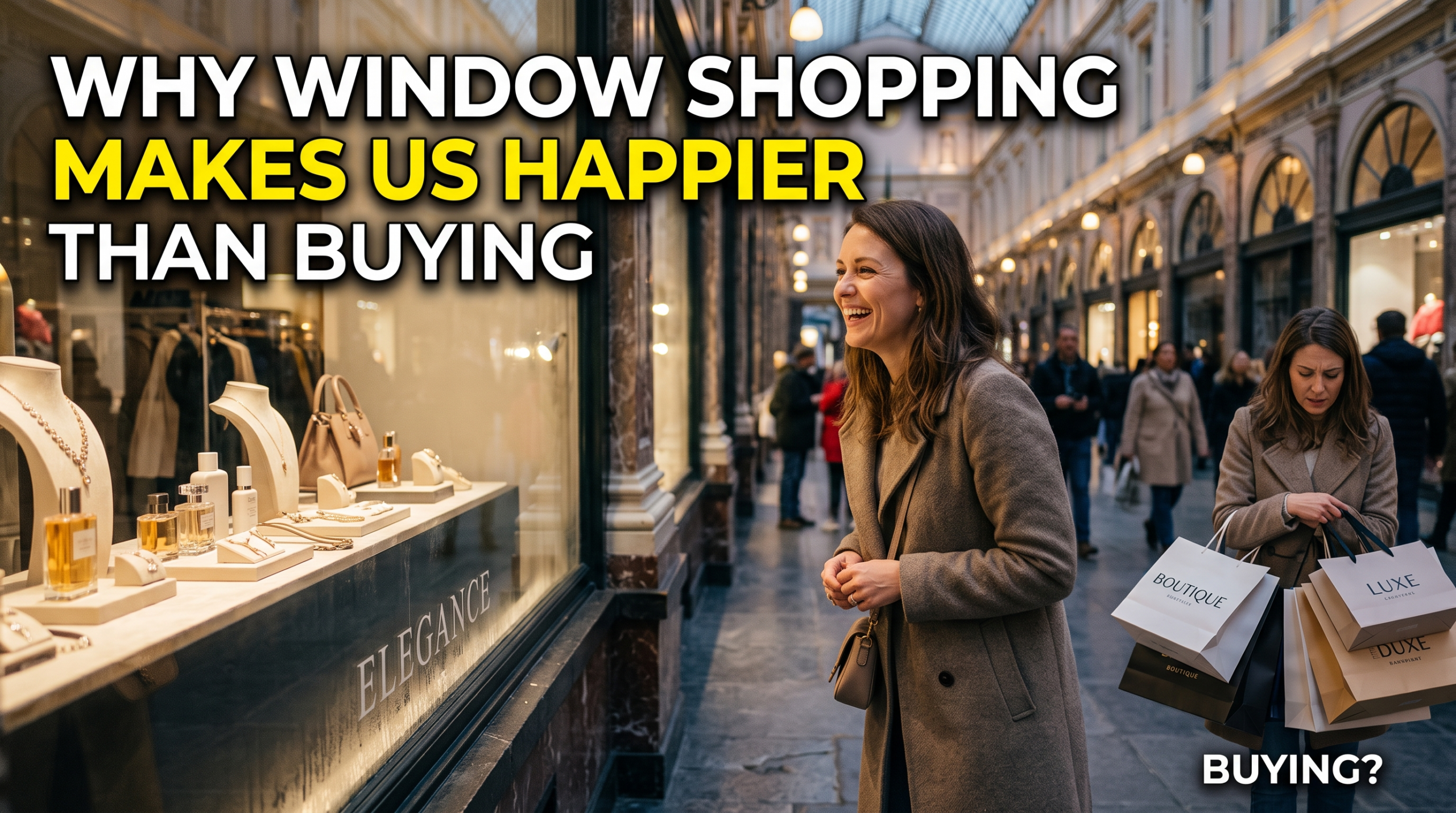
We have all felt it: the pull of a storefront window, the itch to scroll one more product page, the daydream about a car we will probably never own. Conventional wisdom tells us this kind of longing is wasted time, a placeholder for the “real” happiness we will feel once we finally make the purchase. Research on consumer psychology tells a different story. We are often happier in the wanting than in the having, and understanding why can change the way we relate to money, desire, and satisfaction.
The Habituation Problem
We buy something new, and for a few days or weeks it feels like a small triumph. Then, almost without noticing, it becomes just another object in the room. Psychologists call this process habituation: our tendency to adapt quickly to a new circumstance, positive or negative, until it no longer registers as anything special.
Habituation explains a strange pattern many of us recognize but rarely name. We chase a purchase with real intensity, we get it, and within weeks we are already eyeing the next thing. The wanting doesn’t go away when the buying is done. It just finds a new target.
This is not a personal failing. It is a well-documented feature of how our brains process reward. The excitement of a new phone, car, or wardrobe piece is real, but it is also temporary by design, because our nervous systems are built to notice change, not to sustain a fixed level of pleasure indefinitely.
Why Anticipation Outperforms Ownership
If habituation flattens the joy of ownership, what does not flatten as quickly? The anticipation itself.
We can spend months, even years, enjoying the mental rehearsal of a purchase we have not made. We picture ourselves using it, we research it, we compare options, and each of these small acts of imagination delivers its own modest reward. Unlike ownership, anticipation does not habituate at the same rate, because we are engaging with a moving, evolving fantasy rather than a static object sitting in our garage or closet.
This is part of why window shopping, whether we are walking through a mall or scrolling a wish list at midnight, can feel genuinely good even when we know we are not buying anything. We are not wasting our time longing for something out of reach. We are, in a very real sense, extracting value from the wanting itself.
Experiences vs. Material Objects
The research on this topic consistently draws a line between two categories of spending: experiences and material objects. Experiences, like a trip, a concert, or a class, tend to deliver more lasting happiness than physical goods of comparable cost.
Part of the reason is structural. A material object gives us two phases of enjoyment: the anticipation before we buy it, and a short window of novelty afterward. An experience gives us three: the anticipation, the experience itself, and the memory we get to revisit and retell for years afterward.
We can only tell people we bought a new car so many times before the story goes stale. But we can tell the story of a trip, a shared meal, or a spontaneous adventure indefinitely, and each retelling reactivates a small piece of the original happiness. This is one reason financial advisors and behavioral economists increasingly encourage people to weigh experiential spending more heavily than they might instinctively assume.
Frequency Beats Intensity
One of the more counterintuitive findings in happiness research is that the frequency of positive experiences matters more to our overall wellbeing than their intensity. A single enormous high, like winning an award or making a major purchase, fades faster than we expect. A series of smaller, more frequent positive moments accumulates into a steadier and more durable sense of contentment.
This has a direct application to spending behavior. The occasional daydream about a dream purchase, repeated over months or years, can generate more cumulative happiness than the one-time rush of actually buying it. We are, in effect, trading a single spike for a long series of smaller lifts, and the math tends to favor the latter.
How to Practice Mindful Window Shopping
None of this means we should never buy anything we want. It does suggest a more deliberate relationship with desire is worth cultivating. A few practical approaches:
- Let wish lists live longer. Add items to a cart or wish list and revisit them over weeks instead of buying immediately. The delay itself can be a source of enjoyment rather than frustration.
- Browse without obligation. Visiting a store or a product page with no intention to buy removes the pressure and lets the pleasure of imagining ownership stand on its own.
- Prioritize experiential purchases. When a purchase decision is close, weigh how much of the value comes from the experience of having it versus simply owning it.
- Notice the habituation curve. Before buying, ask how the object will feel in three months, not just in the first week. This can temper impulse spending without eliminating enjoyment.
- Treat anticipation as legitimate pleasure. Rather than viewing window shopping as a lesser substitute for buying, we can recognize it as a genuine and renewable source of satisfaction in its own right.
The Bottom Line
Wanting is not simply a waiting room before happiness begins. For many of us, it is where a meaningful share of our happiness actually lives. Recognizing that the anticipation of a purchase can rival, and sometimes exceed, the satisfaction of owning it gives us permission to enjoy window shopping without guilt, and to be more thoughtful about which purchases are worth converting from daydream into reality.