

Lifestyle Experiments: How to Test New Habits Before Committing to Them
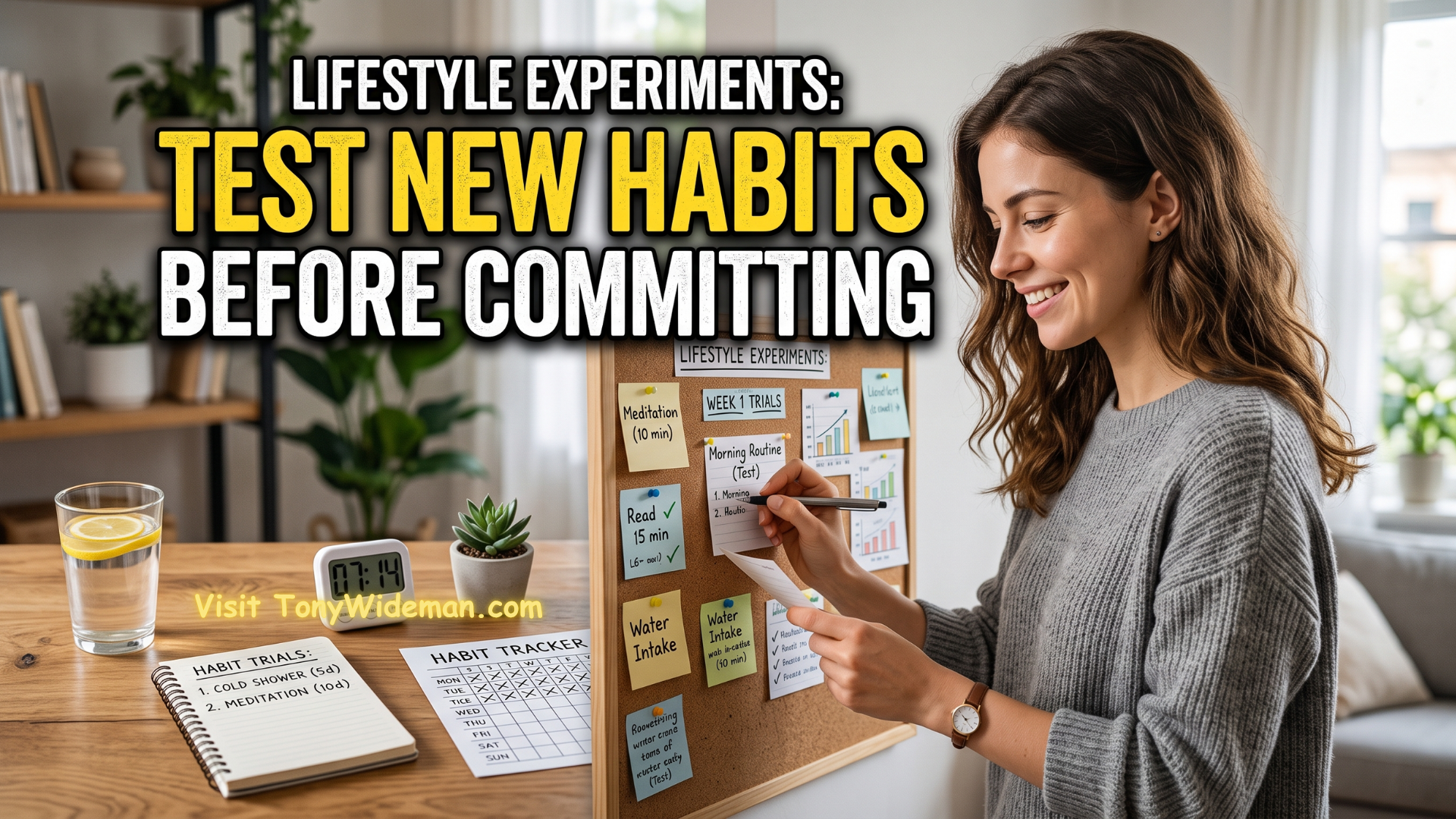
Feeling stuck in a routine that no longer serves us is one of the most common (and most frustrating) parts of adult life. We know something needs to change, but the sheer volume of advice out there — new diets, new apps, new “life hacks” — makes it hard to know where to start. The good news is that we don’t need a complete life overhaul to move forward. We need a lifestyle experiment.
What Is a Lifestyle Experiment?
A lifestyle experiment applies the basic logic of the scientific method to our everyday habits. Instead of testing a hypothesis in a lab, I test a change in behavior—and instead of publishing a paper, I decide whether that change is worth keeping.
The process is simple: I pick one habit, change it for a defined period of time, track what happens, and then use the results to decide whether to continue, adjust, or abandon the experiment. There’s no pressure to make anything permanent from day one. We’re just gathering data on our own life.
The Five Types of Lifestyle Experiments
Nearly every lifestyle experiment falls into one of five categories. Using something familiar — our morning coffee — as an example, here’s what each type looks like in practice:
- Add — Introduce something new, like starting a daily coffee habit.
- Remove — Eliminate something, like cutting coffee out altogether.
- Swap — Replace one habit with another, like trading coffee for tea.
- Create — Change how we engage with a habit, like only drinking coffee we brew ourselves.
- Track — Simply monitor a behavior without changing it, like logging how often we reach for a cup.
Understanding these categories makes it much easier to design an experiment around almost any part of our lives — diet, spending, screen time, relationships, or creative work.
How to Design a Lifestyle Experiment That Actually Works
A poorly designed experiment is hard to finish and even harder to learn from. Four principles separate the experiments that produce real insight from the ones that fizzle out by day three.
1. Set a Realistic Timeline
The experiment needs to run long enough to move past the initial adjustment period, but not so long that it becomes unsustainable. A 21 to 90-day window tends to hit that sweet spot. Shorter experiments rarely reveal anything beyond the discomfort of change itself, while much longer ones increase the odds of quitting early.
2. Calibrate the Difficulty
We should aim for something that’s easy to slightly challenging — not a dramatic overhaul. Someone who barely exercises shouldn’t commit to 45 minutes of daily cardio for three months. A far more sustainable starting point would be a short daily walk. Small, repeatable changes compound over time in a way that ambitious, short-lived ones simply can’t.
3. Make It Trackable
Without tracking, there’s no experiment — just a vague attempt at self-improvement. A notes app, spreadsheet, or even a piece of paper on the wall works fine. What matters is capturing enough detail to make an informed decision once the timeline ends. Sometimes the result is “nothing changed,” and that’s valuable information too, especially when the experiment involved removing a recurring cost or habit.
4. Isolate the Variable
Running several experiments simultaneously might feel efficient, but it makes it nearly impossible to know what actually caused any changes we notice. Did energy levels improve because of more water, less caffeine, or better sleep? Testing one variable at a time keeps the results clean and the conclusions trustworthy.
Lifestyle Experiment Ideas Worth Trying
Once the framework makes sense, the hardest part is often just picking a starting point. These ideas span diet, finances, technology, and creativity, and any of them can be scaled up or down to match personal comfort levels:
- Remove added sugar from the diet
- Deactivate social media accounts temporarily
- Commit to one simple exercise every day
- Create something small every day (writing, art, music)
- Cook every meal from scratch
- Try a minimalist wardrobe challenge, such as Project 333
- Go plastic-free or zero-waste for a set period
- Enforce a personal shopping ban
- Cut out TV entirely, or restrict it to certain hours
- Track mood and energy levels daily
- Track every dollar spent
- Eliminate coffee or caffeine
- Go car-free, or reduce from two vehicles to one
- Adopt a whole-food diet
- Limit phone use to one hour per day
- Try a plant-based diet
- Declutter using a “minimalist game,” removing one item on day one, two on day two, and so on
Tips for Staying Consistent
Sticking with a lifestyle experiment through its full timeline is what makes the results meaningful. A few strategies make that far more achievable:
Keep it simple. This doesn’t need to be the only lifestyle experiment we ever run — it’s the first of many. Starting small leaves room to build momentum over time.
Find an accountability partner. Change is easier with someone else invested in the outcome. A friend running the same experiment can provide encouragement during the harder days.
Track progress somewhere visible. Whether that’s a shared spreadsheet, a note on the fridge, or a post on social media, visibility creates a gentle form of accountability that keeps motivation from slipping.
It’s worth expecting the first few days to feel uncomfortable, especially if the change disrupts a long-standing habit. That discomfort is normal, and it typically fades within the first week as the new behavior starts to feel less foreign.
Common Mistakes to Avoid
A few missteps tend to derail lifestyle experiments before they can produce useful results:
- Starting too big. Ambitious goals feel motivating at first but are the most likely to be abandoned.
- Skipping the tracking step. Without data, there’s no way to make an informed decision at the end.
- Running multiple experiments at once. This makes it impossible to isolate what’s actually driving any changes.
- Waiting for the “right” time to start. There’s no need to wait for a Monday, a new month, or a New Year’s resolution — starting today is what actually moves the needle.
Final Thoughts
Lifestyle experiments offer a low-risk, high-insight way to figure out what actually improves our day-to-day life, rather than relying on guesswork or generic advice. By choosing one habit, setting a clear timeline, tracking the results, and isolating the variable, we can make real, evidence-based decisions about how we want to live — one small experiment at a time.