The Power of Positive Self-Talk: Phrases That Reshape How We Think
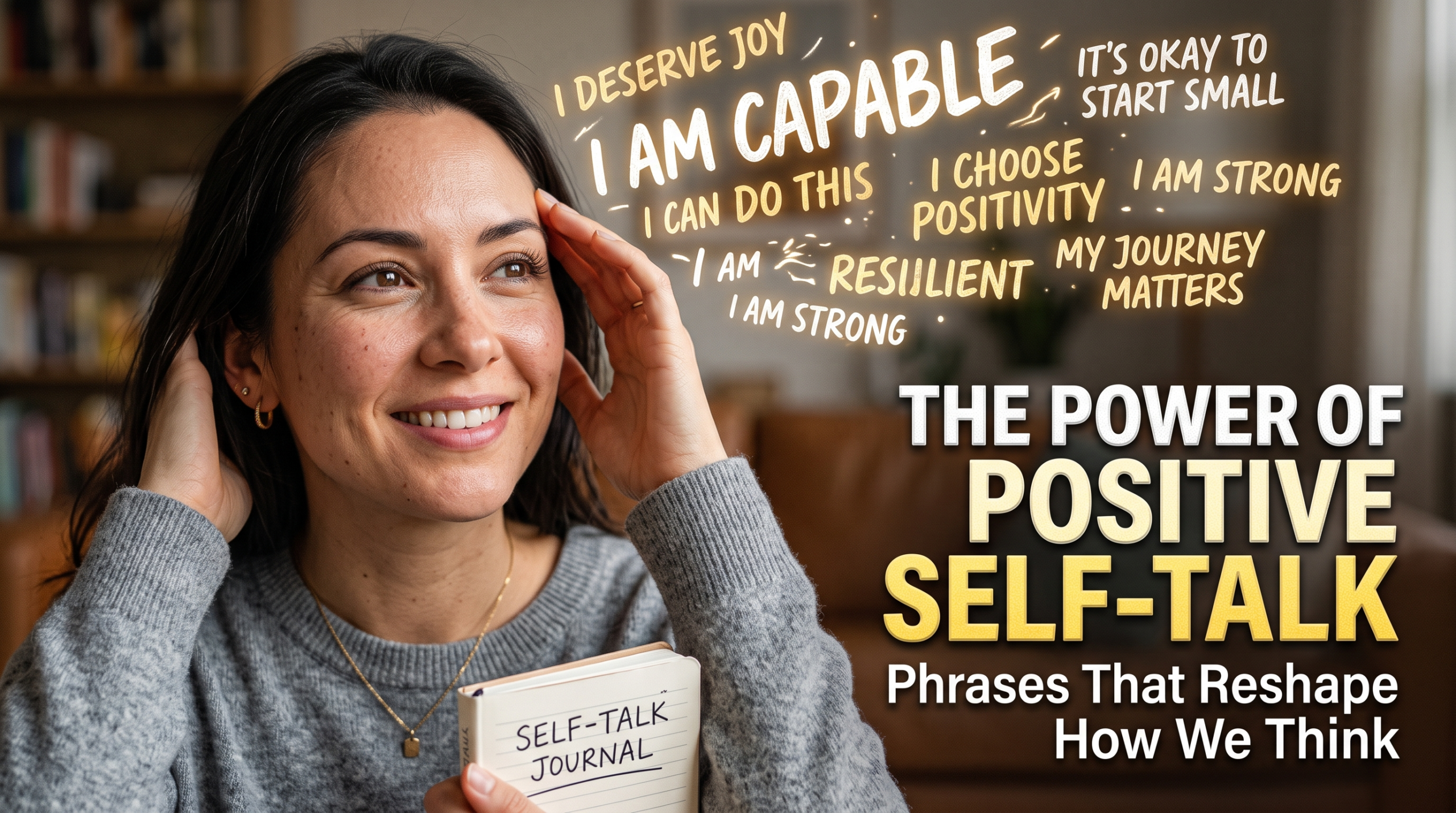
Why the Words We Choose Matter More Than We Realize.
We rarely stop to notice the running commentary in our heads. Yet that inner dialogue — the phrases we repeat to ourselves in traffic, before a meeting, or after a setback — quietly sets the tone for how we experience everything else. We are not simply narrating our lives with this language; we are actively building the emotional architecture we live inside.
Psychologists who study self-talk have found that the structure of our internal language shapes stress response, motivation, and even performance under pressure. When our habitual phrases skew toward doubt or complaint, we prime ourselves for a more anxious, reactive day. When they skew toward agency and gratitude, we prime ourselves for resilience instead. In this piece, I explore several phrases worth adopting into daily speech, and why each one carries more psychological weight than it first appears.
1. “I Have a Choice”
Few phrases restore a sense of control as quickly as this one. We often talk about our circumstances as though they simply happened to us — a job we “had” to take, a relationship we “couldn’t” leave, a habit we “can’t” break. This language, repeated often enough, becomes a kind of self-fulfilling powerlessness.
Reclaiming the phrase “I have a choice” does not deny real constraints; it reframes our relationship to them. We may not control every input into our lives, but we retain some measure of control over our response. Naming that choice out loud — even in small, low-stakes moments — builds the mental habit of agency that carries into bigger decisions later.
2. “Let’s Get Started”
Intention without action tends to quietly decay into regret. We can hold a goal in our minds for months, polishing it, without ever making it real. The phrase “let’s get started” works because it collapses the gap between deciding and doing.
This is especially useful for anyone prone to over-planning. Momentum, not perfect preparation, is usually what determines whether a goal survives contact with real life. Saying the phrase aloud — to a colleague, a friend, or simply to ourselves — turns a private intention into a small, public commitment, which research on behavior change consistently shows increases follow-through.
3. “I Have What It Takes”
Self-doubt rarely announces itself directly. It shows up disguised as caution, as “realism,” as waiting for more experience before trying. Left unchecked, it becomes a quiet ceiling on what we attempt.
Countering it works best with specificity rather than generic affirmation. Instead of a vague “I can do this,” recalling a concrete past success — a difficult conversation navigated well, a deadline met under pressure — gives the phrase evidentiary weight. The brain responds differently to a claim backed by a memory than to an abstract slogan. Leaving your comfrot zone is where the magic happens.
4. “How Can I Help?”
Outward-facing language tends to correlate with outward-facing wellbeing. People who orient toward contribution — asking what they can offer rather than what they’re owed — consistently report higher life satisfaction in longitudinal happiness research.
This phrase is also practically useful in professional settings. Leading with an offer to help, rather than a request or a complaint, changes the tenor of a conversation before it even begins. It signals collaboration rather than competition, which tends to be reciprocated.
5. “Look How Far I’ve Come”
Progress is notoriously hard to see from the inside, especially when it happens gradually. We compare our current state to some idealized future point rather than to where we actually started, which manufactures a sense of stagnation that isn’t accurate.
Building in a regular moment — weekly, monthly — to explicitly say this phrase forces a comparison against a real baseline instead of a moving target. It is one of the simplest antidotes to burnout, because burnout is often less about workload and more about the perception that effort isn’t producing visible results.
6. “I Have More Than Enough”
Scarcity thinking is sticky. Even people in objectively comfortable circumstances can default to a mental posture of lack, focused on the next acquisition rather than what is already present. This phrase interrupts that pattern directly.
It is worth noting this is not about complacency or abandoning ambition. It is about decoupling contentment from achievement, so that gratitude isn’t perpetually deferred until some future milestone is hit.
7. Silence
The final entry on this list is not a phrase at all — it’s the deliberate absence of one. Constant internal narration, even positive narration, can become its own form of noise. Building small pockets of quiet into a day — a walk without a podcast, a few minutes before sleep without a screen — gives the nervous system room to settle that words alone cannot provide.
Building the Habit
None of these phrases work as one-time affirmations. Their value compounds with repetition, the same way any other habit does. A useful approach is to anchor one phrase to an existing daily routine — saying “I have a choice” during the morning commute, or “look how far I’ve come” at the end of each week — so the practice attaches to something that already happens reliably rather than relying on willpower alone.
The language we default to under normal conditions is also the language we default to under stress. Building better verbal habits during calm moments is, in effect, preparation for the harder ones.