

The Wabi-Sabi Lifestyle: A Complete Guide to Embracing Imperfection
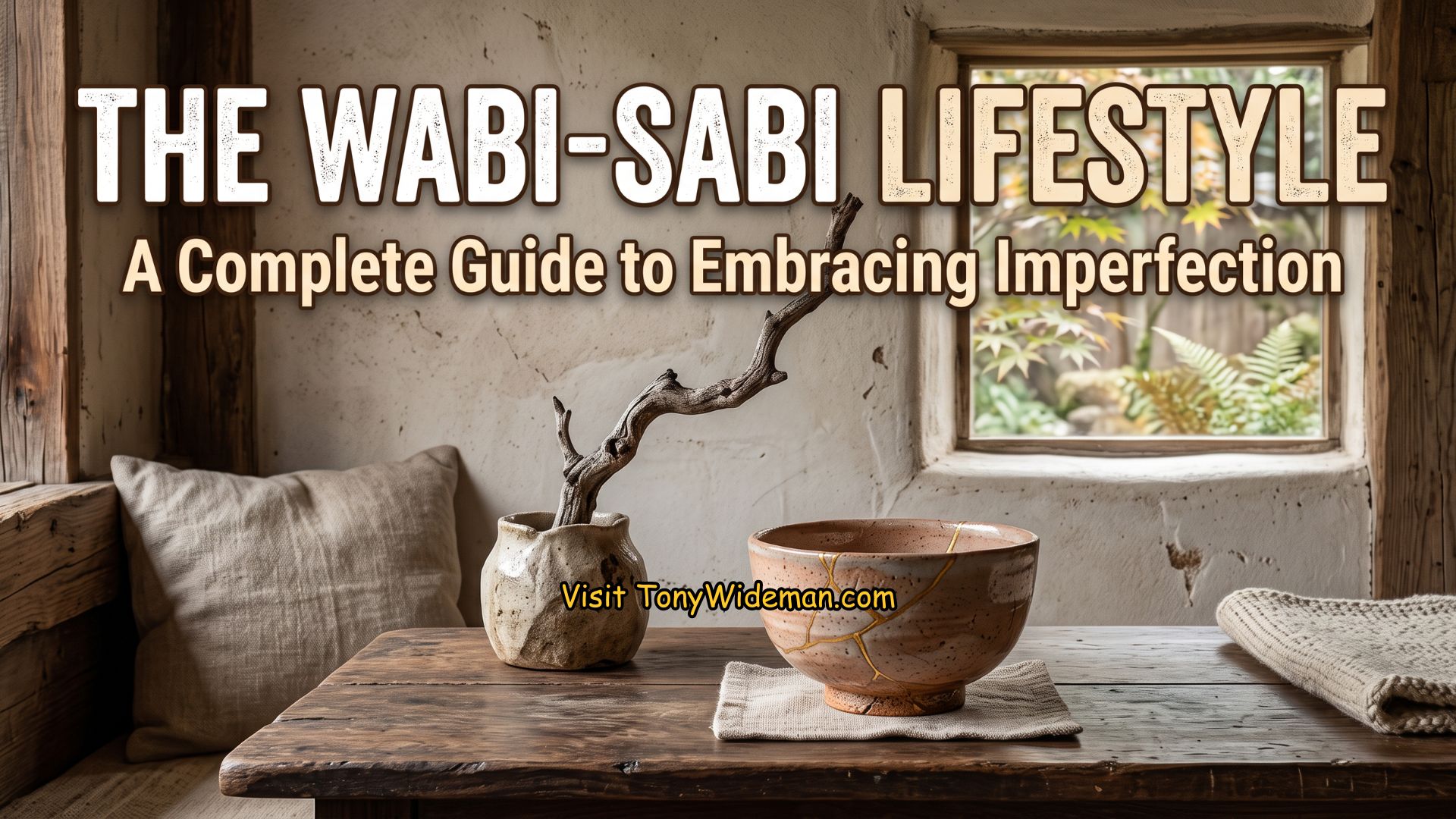
Modern life rewards polish, speed, and constant upgrading. Homes are staged for symmetry, careers are measured by relentless ambition, and social feeds present an endless parade of curated perfection. Against this backdrop, the Japanese concept of wabi-sabi offers a quiet but radical alternative: a way of living that finds beauty in what is worn, incomplete, and impermanent rather than what is flawless and new.
We explore what the wabi-sabi lifestyle actually means, where it comes from, and — most importantly — how we can put it into practice in our homes, our routines, and our relationship with ourselves.
What Is the Wabi-Sabi Lifestyle?
Wabi-sabi is a Japanese aesthetic and philosophical outlook built around three intertwined ideas: impermanence, imperfection, and incompleteness. Rather than treating these as flaws to correct, wabi-sabi treats them as the natural condition of everything that exists — and therefore as a legitimate, even preferable, source of beauty.
The term itself blends two older Japanese words. Wabi originally described the melancholy of solitary, rustic simplicity — the quiet dignity found in a modest life stripped of excess. Sabi referred to the beauty that emerges as objects age: the patina on bronze, the fading of dyed cloth, the moss that gradually covers stone. Over centuries, the two merged into a single sensibility that values the weathered over the pristine, the handmade over the mass-produced, and the asymmetrical over the perfectly balanced.
Living a wabi-sabi lifestyle, then, is not primarily about decorating a home with rustic pottery. It is a way of relating to ourselves, our possessions, and the passage of time that quietly reduces the pressure to be flawless.
Where Wabi-Sabi Comes From: Roots in Zen and Tea Culture
Wabi-sabi did not emerge as an abstract design theory. It grew out of lived practice, most notably the Japanese tea ceremony.
By the 1400s, tea gatherings among Japan’s ruling class had become opulent displays of imported Chinese ceramics and lavish surroundings — closer to status symbols than spiritual practice. Tea master Murata Shukō pushed back against this trend, advocating a return to modest, locally made utensils and unadorned tea rooms that better reflected Zen values of humility and presence. This deliberate embrace of rustic simplicity became the foundation of what we now call wabi-sabi.
The philosophy draws directly on core Buddhist teachings, particularly the three marks of existence:
- Impermanence — nothing lasts; everything is in a constant state of change
- Suffering — clinging to permanence and perfection produces dissatisfaction
- Non-self — the boundaries we draw between ourselves and the world are provisional, not fixed
Where Western aesthetic traditions have historically prized symmetry, permanence, and idealized forms — think of the flawless marble statues of classical antiquity — wabi-sabi treats those same qualities as somewhat artificial. Beauty, in this view, is not something objects possess despite aging and wear; it is something that emerges through aging and wear.
The Seven Aesthetic Principles Behind Wabi-Sabi
Scholars of Zen aesthetics often break wabi-sabi down into seven interrelated principles. Together, they form a kind of design and life philosophy:
- Kanso (simplicity) — eliminating clutter and unnecessary ornamentation
- Fukinsei (asymmetry) — embracing irregular, imbalanced forms over rigid symmetry
- Shibumi (understated beauty) — favoring subtlety over ostentation
- Shizen (naturalness) — allowing things to appear unforced, without visible effort or artifice
- Yugen (subtle grace) — leaving something to the imagination rather than spelling everything out
- Datsuzoku (freedom from convention) — breaking free of rigid rules and routine expectations
- Seijaku (tranquility) — cultivating stillness and quiet energy
These principles apply as much to a living room as they do to a mindset. A wabi-sabi approach to a space favors a single, imperfect ceramic bowl over a matching dinner set. A wabi-sabi approach to daily life favors leaving room in the schedule over filling every hour productively.
Wabi-Sabi vs. Western Perfectionism
We live in a culture that often equates worth with flawlessness — flawless skin, flawless careers, flawless homes. Perfectionism promises control and approval, but research consistently links it to anxiety, burnout, and diminished self-esteem, because the standard it demands can never actually be met.
Wabi-sabi offers a direct counterpoint. Instead of chasing an ideal that recedes the closer we get to it, wabi-sabi asks us to notice what is already present, cracks and all. This does not mean abandoning standards or ambition altogether. It means loosening the grip of an all-or-nothing mindset in which anything less than perfect feels like failure.
The contrast becomes especially clear in how each tradition treats damage and age:
| Perfectionist Mindset | Wabi-Sabi Mindset |
|---|---|
| Damage should be hidden or discarded | Damage can be highlighted as part of the story |
| Aging is decline | Aging is depth and character |
| Symmetry signals quality | Asymmetry signals authenticity |
| Busyness signals value | Stillness signals wellbeing |
| New is inherently better | Worn can be more meaningful than new |
Kintsugi: The Art of Golden Repair
No discussion of the wabi-sabi lifestyle is complete without kintsugi, the traditional Japanese craft of repairing broken pottery with lacquer mixed with powdered gold. Rather than concealing the crack, kintsugi illuminates it, turning the site of breakage into the most visually striking part of the object.
The practice is traditionally traced to the late 1300s, when a shogun sent a damaged tea bowl abroad for repair and was dissatisfied with the crude metal staples used to mend it. Japanese artisans developed the gold-lacquer technique as a more graceful solution — one that did not pretend the damage never happened, but instead made it part of the object’s history and value.
As a metaphor, kintsugi has become widely used in personal development and therapeutic contexts to represent resilience: the idea that our own breaks, losses, and setbacks do not have to be hidden. When integrated with care and honesty, they can become the very things that give a life depth, character, and meaning. A kintsugi-informed mindset invites us to view scars — emotional or physical — not as evidence of brokenness but as evidence of having survived and grown.
Six Ways to Bring Wabi-Sabi Into Everyday Life
Adopting a wabi-sabi lifestyle does not require a dramatic overhaul. It tends to work best as a series of small, consistent shifts in attention and habit.
1. Simplify your surroundings
Clear physical clutter and keep only what genuinely serves a purpose or brings meaning. A wabi-sabi space is not empty — it is edited. Fewer, better-chosen objects allow each one to be appreciated rather than lost in visual noise.
2. Choose natural materials and secondhand goods
Wood, stone, linen, and unglazed ceramics age visibly and beautifully over time, unlike synthetic materials designed to look identical forever. Choosing pre-owned or handmade items over mass-produced ones also reconnects us with the story and imperfection embedded in each piece.
3. Practice “less is more” arrangement
A single branch in a weathered vase communicates more than an elaborate, symmetrical floral display. This principle extends beyond décor: a wardrobe of a few well-loved pieces, a shelf of books actually read rather than displayed, a calendar with genuine open space.
4. Slow the pace deliberately
Wabi-sabi resists the glorification of busyness. Building unstructured time into a week — time with no productivity target attached — protects against the chronic low-grade stress that comes from constant overscheduling.
5. Eat and drink with attention
The mindful, unhurried rituals of the Japanese tea ceremony offer a template for daily meals: slowing down enough to notice texture, aroma, and the effort behind what is on the plate, rather than treating eating as another task to complete quickly.
6. Notice the beauty in aging
This applies to possessions, spaces, and people alike. A weathered wooden table, a line-worn book spine, the visible signs of age in a face — wabi-sabi asks us to register these not as deterioration but as evidence of a life fully lived.
Wabi-Sabi and Mental Wellbeing
Beyond aesthetics, wabi-sabi has clear implications for psychological health, particularly around self-acceptance, stress, and body image.
Reduced perfectionistic pressure. By reframing flaws as normal rather than shameful, wabi-sabi loosens the internal critic that drives chronic self-judgment. This is especially relevant for anyone whose sense of self-worth has become tightly bound to achievement or appearance.
Lower environmental stress. Cluttered, overstimulating spaces have been linked to elevated cortisol and a persistent low-grade stress response. A simplified, wabi-sabi-inspired environment removes some of that background noise.
Greater tolerance for uncertainty. Because wabi-sabi treats impermanence as the default state of everything, it builds a kind of psychological flexibility — an ability to sit with change and loss without needing to control or resist them.
Deeper self-compassion. Recognizing that flaws, wear, and vulnerability are universal rather than personal failings makes it easier to extend the same grace to ourselves that we might automatically extend to others.
Stronger relational authenticity. A wabi-sabi mindset favors showing up as we actually are over maintaining a curated, effortful image — a shift that tends to deepen trust and closeness in relationships, since authenticity is generally read as more trustworthy than polish.
Building a Personal Wabi-Sabi Practice: A Step-by-Step Approach
For those looking to move from concept to habit, we recommend approaching wabi-sabi as a gradual practice rather than a one-time change.
Step one: Audit one space. Choose a single room or shelf and remove anything that no longer serves a clear purpose. Notice how the remaining objects — especially imperfect or handmade ones — stand out once the clutter is gone.
Step two: Identify one area of forced perfectionism. This might be a work habit, a body-image pattern, or a relationship dynamic where flawlessness feels non-negotiable. Name it explicitly rather than letting it operate unconsciously.
Step three: Introduce a small “imperfect” choice. Wear the slightly worn sweater instead of buying new. Serve a meal on mismatched plates. Leave an email unanswered for a day without apologizing. Small, low-stakes practice builds tolerance for larger discomforts later.
Step four: Build unscheduled time into the week. Protect at least one block of time with no agenda, output, or productivity attached to it.
Step five: Reframe one “flaw” as a marker of history. This could be a scar, a mistake at work, or an aging object. Practice describing it in terms of what it represents rather than what it lacks.
Step six: Revisit and repeat. Wabi-sabi is not a checklist to complete once. It is a lens that needs periodic re-application, especially during periods of stress when perfectionistic habits tend to resurface.
Common Misconceptions About Wabi-Sabi
“Wabi-sabi means being messy or careless.” In practice, wabi-sabi spaces and habits are deliberately edited, not neglected. The philosophy values intentional simplicity, not disorder.
“Wabi-sabi is only an interior design trend.” While it has been popularized in home décor, its origins and deepest applications concern mindset, mortality, and self-acceptance far more than furniture.
“Wabi-sabi means giving up on improvement.” Accepting imperfection as natural does not mean abandoning growth or care. It means releasing the specific belief that only flawless outcomes are acceptable along the way.
Frequently Asked Questions
What does wabi-sabi mean in simple terms? Wabi-sabi is a Japanese worldview that finds beauty and value in imperfection, impermanence, and simplicity, rather than treating these qualities as problems to be fixed.
How is kintsugi related to wabi-sabi? Kintsugi is a physical craft — repairing broken pottery with gold-dusted lacquer — that embodies wabi-sabi values by highlighting rather than hiding damage, turning breakage into a visible part of an object’s beauty and history.
Can wabi-sabi help with perfectionism? Yes. By reframing flaws, aging, and incompleteness as natural rather than shameful, a wabi-sabi mindset can reduce the anxiety and self-criticism that often accompany perfectionistic thinking.
How do I start living a wabi-sabi lifestyle? Start small: simplify one space, choose natural or secondhand items over synthetic new ones, slow the pace of daily routines, and practice noticing beauty in things that are worn, aged, or imperfect rather than immediately replacing or hiding them.
Is wabi-sabi a religion or a design style? Neither exclusively. It originated from Zen Buddhist values expressed through the Japanese tea ceremony and has since expanded into a broader life philosophy that touches design, mindfulness, and psychological well-being.